Tuesday, 24 August 2021

BROWN HAIRSTREAKS AND GRAYLINGS


With few days left of the summer holidays in which to  tick off my last remaining butterflies of the season, I headed over to Otmoor to see if I could get some better views of brown hairstreaks.

I arrived at 10 30 am. and  turned left out of the car park and picked my way through the overgrown path of the 'Roman Road'. until I got to an area where the track   opened out which was my starting point for searching for brown hairstreaks. However, despite looking high and low  none were to be seen here and elsewhere along the path.  Apparently two had been seen at this time yesterday and someone I met had a photo of one he had seen last week.  It was suggested by another visitor that a good place to look was on a large bramble bush just past the first screen so ,  despite knowing this would entail a considerable walk, I elected to go, seeing  as it might be my only chance. However, here too, I drew a blank though  I did get some compensation with the sighting of a golden plover seen amongst lapwings from the first screen. 

I   retraced my steps to the Roman road, which is where I have generally seen brown hairstreaks in the past, and decided to have another look.   Eventually, by training my binoculars on  a fairly high up  area of bramble at the back of the vegetation, I found  a rather tatty specimen nectaring on a flower. At least I could tick it off now!

Another visitor came along and I showed it to him,  and he told me that he had been watching one, in much better condition just before the junction with the car park . I hurried over there and found, as he had said, a female in prime condition which gave some much better photographs especially when turned toward the sun. A number of people had now arrived and were searching for hai streaks but it was time for me to leave rather than wait and see if any more were found.

Other species found at Otmoor included large numbers of ruddy and common darters, a southern hawker and a small copper. 


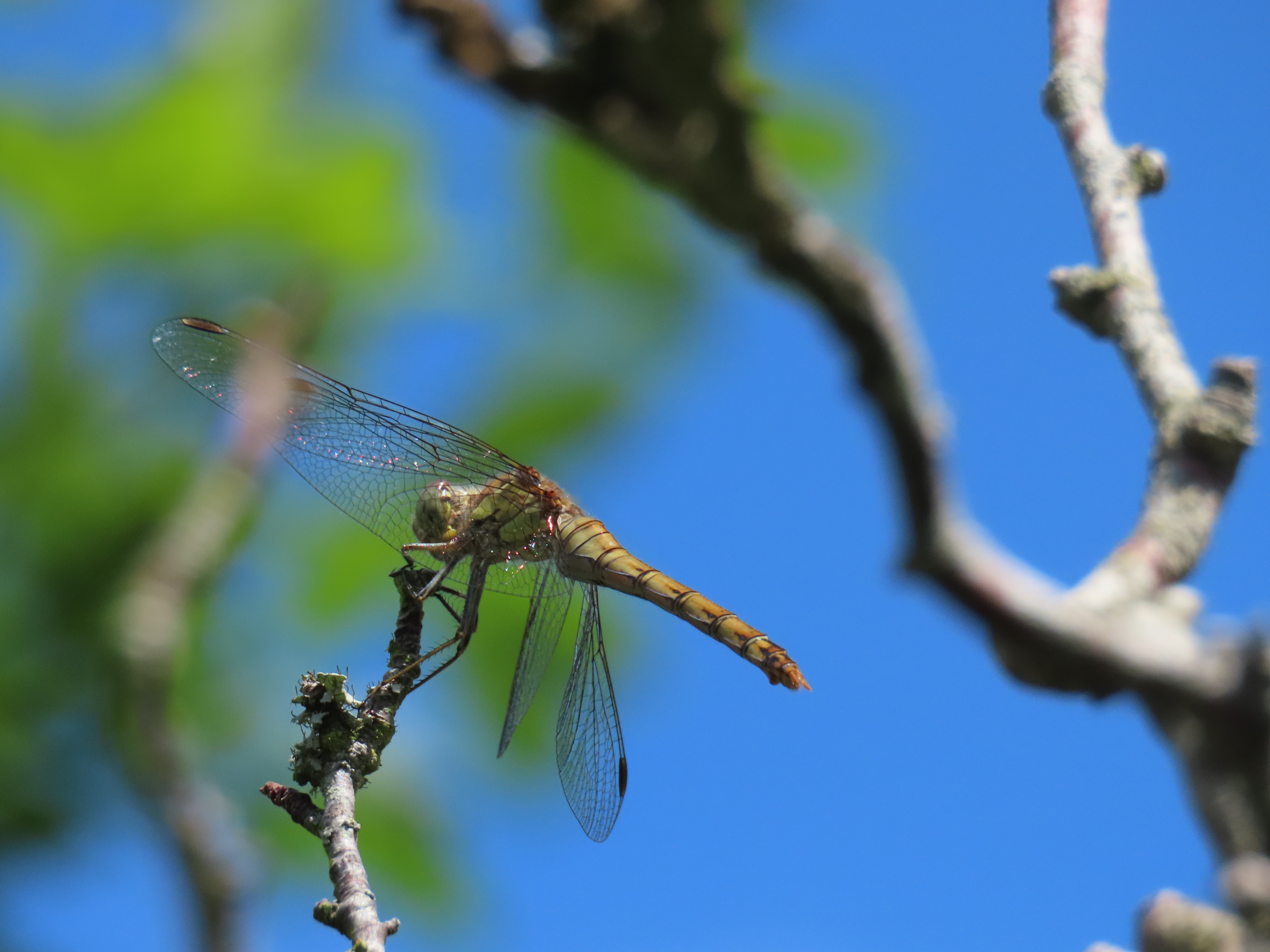
southern hawker

spot the golden plover!

small copper

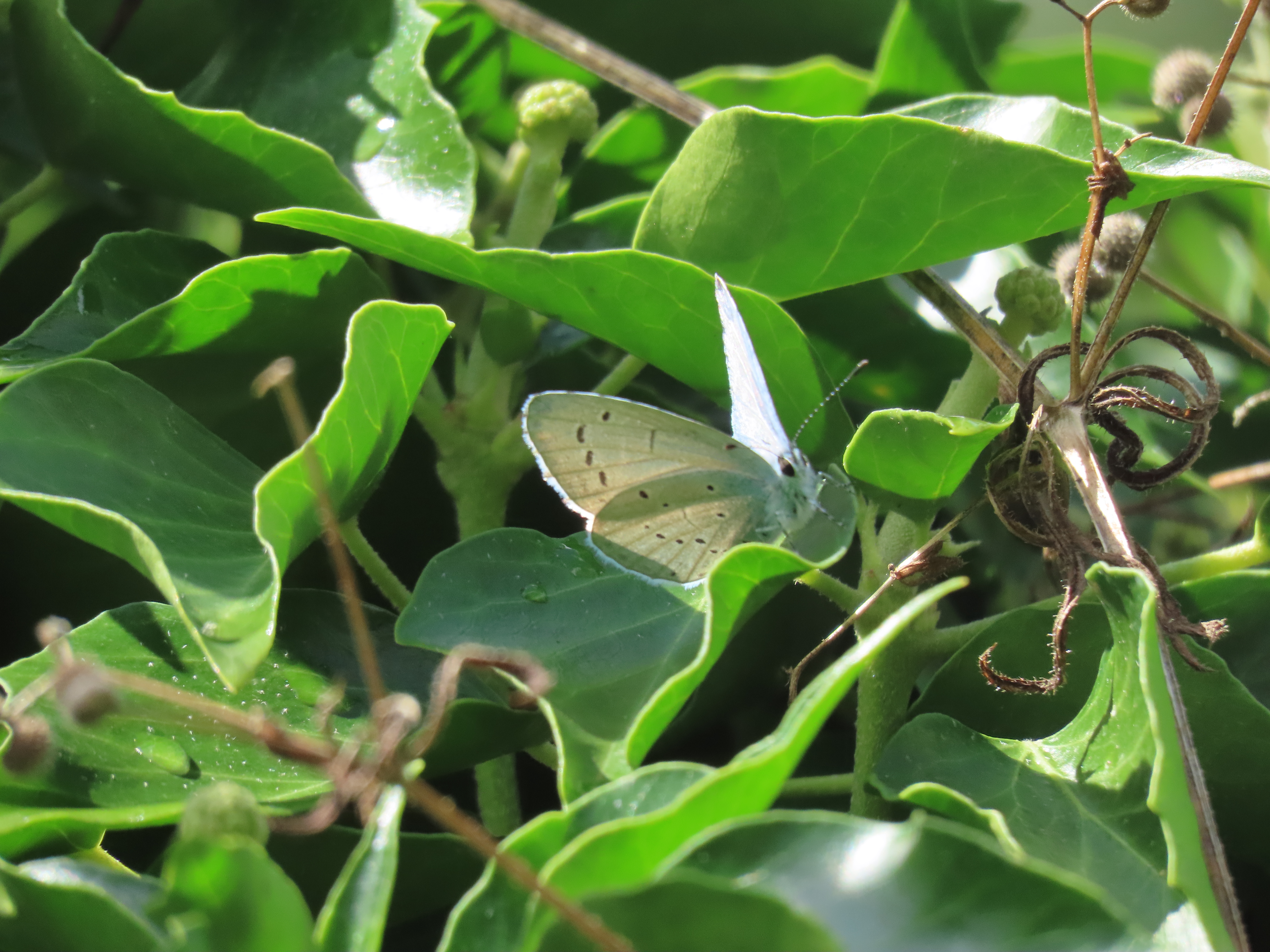
brown hairstreak


I returned to the car and whilst eating lunch, considered whether I should make the journey south to a conifer plantation at Mortimer in Berkshire to tick off my final target butterfly. I knew if I didn't go today, my next opportunity would be early September which may be too late. 

So at 2.30 pm I found myself walking down a gravel track bordered with heather and conifer trees towards an area which is favoured by graylings. These butterflies are incredibly hard to spot when they land on the gravel due to their ability to close their wings and become camouflaged.  so it is only when they are disturbed that you are able to follow them to where they settle, I must have seen at least a dozen in the short time I was there, and one or two settled on spikes of heather too. 

These last two butterflies bring my species count for this year up to 47.  However  I will be looking out for  reports of clouded yellows in September and October to finish my butterfly year. 


grayling


Wednesday, 11 August 2021

SPOONBILL


I visited Slimbridge again today, as a treat for my grandchildren.  Whilst not there primarily to go birdwatching, we did look into the Rushy Hide on the way  to the Estuary Walkway where we were looking for the 'Wetland Heroes ' sign. Although busy with birds there was nothing particularly unusual to see. We then took a quick look from the top of the Estuary Tower which  was pretty quiet  before returning to the main visiting areas. Passing the Rushy Hide again  I noticed that a good number of birdwatchers were now in the hide so I enquired and found that a spoonbill had just relocated there from another part of the reserve. 
Coincidentally, last time I took the children here, there was a spoonbill on site though much more distant. This time I allowed the children plenty of time to look through the binoculars and notice its spoon shaped bill. However they couldn't   appreciate that the sleeping bird to the right of the picture  was in fact a spotted redshank!


Monday, 9 August 2021

BUTTERFLY GARDEN

 Despite the changeable and sometimes quite windy weather, I have noticed a few more  species, visiting my buddleia and also some of the flowers in my newly created   'butterfly flower bed' . On the buddleia I have had large white, peacock and red admiral  and I have also seen brimstone, holly blue, small white, meadow browns and gatekeeper elsewhere in the garden. I have been especially pleased to see more butterflies on my butterfly attracting plants -  scabious, dahlia and lavender. 

I have also seen blue damselflies, as well as a common darter  and today a southern hawker dragonfly settled long enough on the ivy on  my hedge to allow some close viewing especially by my grandson. 


Friday, 6 August 2021

BIG BUTTERFLY COUNT


I hadn't actually got round to doing a butterfly count in my garden but noticing a white butterfly land on my buddleia I thought I'd go outside and see what else was about. It was very breezy but  with some sunshine as I walked round the garden for 15 minutes. The butterfly on my buddleia turned out to be a large white, no others were on it so I went over to  the hawthorn hedge which is mostly covered in ivy and a few brambles here and there. A small blue shape caught my eye - a holly blue, presumably a second brood. It stayed motionless on an ivy leaf before fluttering off to feed on a bramble flower. A red admiral  stopped for a second or to nearby before deciding against settling.  Further along I noticed another white species, this time a small white. 

After all had flown off I stopped next to my newly created 'polinator' flower bed. This year I cleared it of azaleas and have replanted it with flower species such as lavender, scabious, sedum, birds foot trefoil and wild oregano, all of which are meant to be attractive to butterflies. 

Admittedly I have noticed more bees than butterflies  but the oregano is only just coming into flower. Perhaps I will enlarge it next year as it gives a splash of colour to an otherwise fairly 'green' looking garden at this time of year. Something small and brown flew off as I approached, my first thoughts were that it may have been a small skipper but I couldn't be certain. I have had that species in my garden before so it's quite possible.  I also saw a darter type dragonfly but haven't made a formal ID. 


holly blue


peacock - seen on buddleia later


common or ruddy darter?

pollinator flowerbed

bee
bee on lavender


Tuesday, 3 August 2021

SILVER SPOTTED SKIPPER


Today was my annual visit to Aston Rowant and Otmoor to see some of the last emerging butterflies species of the season. At Aston Rowant I hoped to see a species I missed last year; the silver spotted skipper. I'd seen a couple of reports already of 1 and then 5 of these butterflies so entered the reserve with a measure of optimism. I started a conversation with another visitor to the reserve who was looking for the same species and we agreed to give a shout if we found one!  There were hundreds if not thousands  of chalk hill blues-it seemed as every step I took disturbed 2 or 3  of them causing them to fly up from the ground. I also saw a painted lady, green veined white, small and large white, brown argus, meadow brown, gatekeeper, common blue ,brimstone .But no spotted skippers! 

I caught up with the gentleman I'd  been speaking to earlier (who hadn't found any either) and we started to chat about the usual butterfly subjects i.e. where he came from (Essex); which reserves he'd visited;  how many species he'd seen etc..it transpired he only had 2  of the  UK species still to find - cryptic wood white and chequered skipper. He told me he had just returned from Cumbria where he had located most of the northern butterflies..  

We had mostly continued walking as we talked,  but happened to have  stopped  when  I looked down and saw a silver spotted skipper settled on a scabious flower only a few feet away!  We didn't see any more  but were happy to return to the carpark having succeeded in finding our target species. 

 I then drove over to RSPB Otmoor in search of brown hairstreaks. The usual grassy pathway known as the Roman Road was more overgrown than I remembered and very muddy in places. One other person was looking but neither of us saw any brown hairstreaks despite it being their flight period and sunny weather. I then went onto the main reserve and headed to the first screen where a wood sandpiper had been seen earlier but it wasn't showing now. However  I did see a bittern in flight over the reed beds which was a nice surprise.  There were quite a lot of dragonflies  too including an emerald damselfly which I'd not found before. 

I retraced my steps via the Roman road and this time saw up to 5 small dark butterflies fluttering  at the top of some ash trees. I assume they were brown hairstreaks. 

green veined white

peacock

gatekeeper

silver spotted skipper
emerald damselfly


Monday, 2 August 2021

CHALKIES AT BARBURY CASTLE


I took advantage of a short spell of sunshine over lunch time to head to Barbury Castle Country Park where I hoped to find my first chalkhill blue butterflies of the year. The gulleys surrounding the hillfort were awash with flowers and it wasn't long before I found my first 'chalkies'. The easiest place to see them was by climbing down to the bottom of the gulley where most of the butterflies were to be found though I didn't spot any females.  

I clocked up a respectable 11 butterfly species over all so was  pleased with that.  In addition to the  chalkhill blues, there were many large whites, meadow browns and gatekeepers; also ringlets, small whites, marbled whites, small skippers, plus a small blue, peacock and brimstone. There was also a skipper which could possibly be an essex skipper


chalkhill blue


large white
gatekeeper

essex skipper?


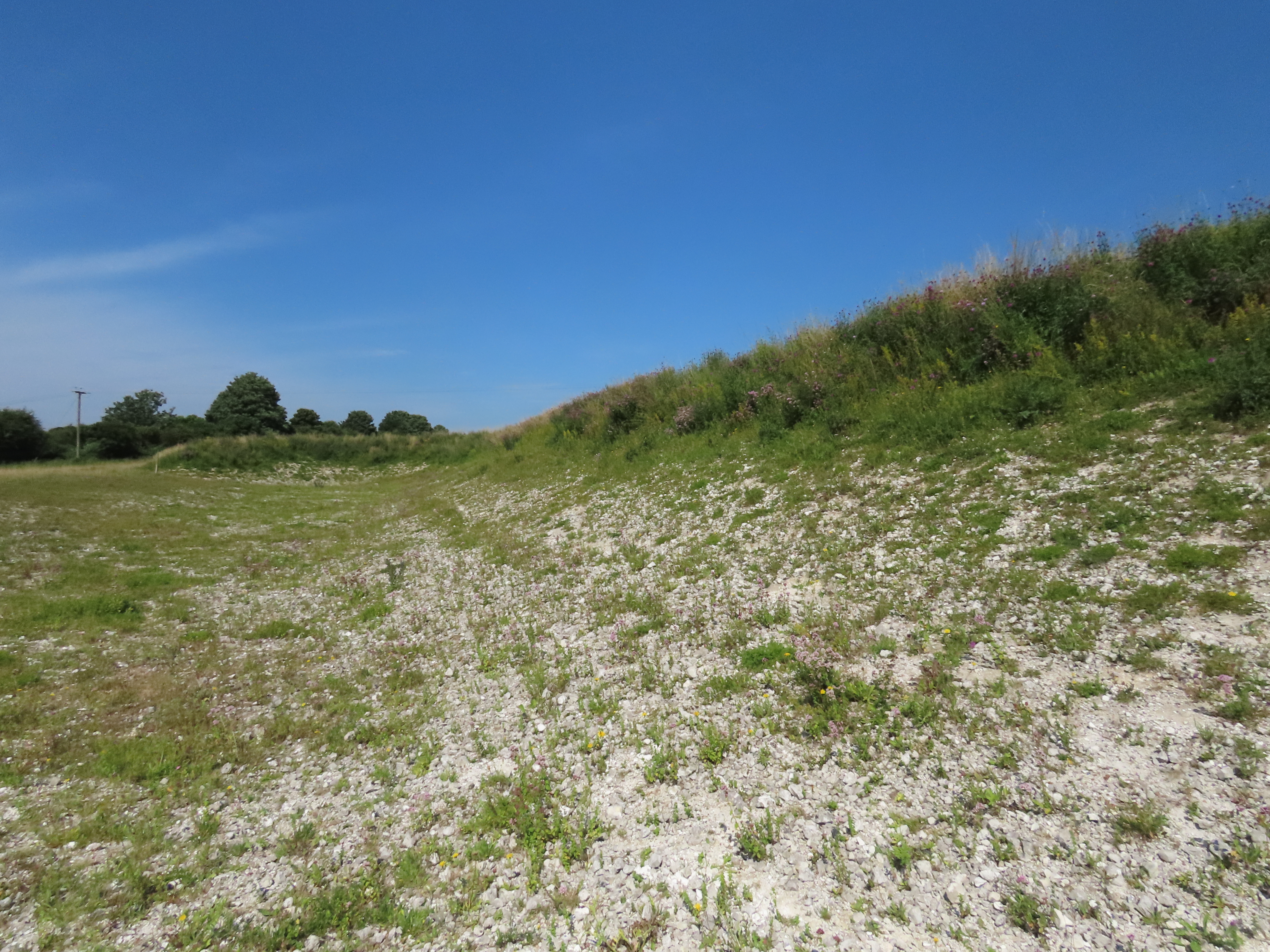
gulleys where the butterflies are mainly found


Saturday, 24 July 2021

Winterbourne downs and Langford lakes


Thankfully it was a it cooler today, with a light but very welcome breeze. I  journeyed southwards to visit   RSPB Winterbourne Downs which is mainly a wildflower meadow but does have an area where stonecurlews breed. l left the carpark and followed a mown grassy path  lined with bramble bushes. These were attracting many butterflies and some dragonflies too, mainly meadow browns, gatekeepers together  with some whites, a peacock and red admiral. I stopped at the stone curlew viewing point but  it did say on the notice that you would require binoculars or telescope to see the birds. The vegetation had also grown quite tall so it was unsurprising I coudn't see anything. Another feature of the reserve is a man made S shaped chalk butterfly bank. This was covered in flowers but there were not that many chalkland species to be seen, I only spotted one small blue.  


small blue


Having completed my visit, I then drove to nearby Langford lakes, a wildlife trust reserve where for 12 days a red footed falcon has been delighting visitors . It was last seen  on Monday so the reserve was a lot quieter today   than  it has been. From the Meadow hide at the far end of the reserve  I could see how people were able to get such fantastic shots of it perching on a post, however I think that social distancing rules were largely forgotten in birders' desire to see this bird so I do wonder how many people were 'pinged' as a result. 

There was not much else in the way of birding really,  but I  did spot more gatekeeper butterflies and a second painted lady of the year. Dragonflies were continually buzzing around as they fed on insects but very rarely settling. Although a very quiet time of year, it was nice to visit a couple of new places. 


MANX SHEARWATER AT FARMOOR

  A manx shearwater found its way to Farmoor Reservor today and was reported late morning, so as I was looking for somewhere to go, I headed...