Thursday, 25 January 2024

DIPPER


I finally found an opportunity to visit Rodborough Common, just outside Stroud where a substantial flock of waxwings has been recorded over the week ( 32+ birds) and I hoped to see them. However, on arrival it appeared that although they had been seen earlier, they had been very 'flighty' and had flown off and no one yet had re-located them. I explored the common for about an hour, along with several other birders, but sadly didn't find them. 

I therefore decided to pop into Stroud and walk along the river bank of the River Frome which is a nature reserve and  is home to dippers. I've been there most years, with varying success, sometimes seeing just one dipper for a few minutes, at other times a fleeting glimpse as one flies past. 

Today I had only gone half way along the path when I spotted the white 'bib' of a dipper on the opposite bank. The bird was doing its customary bobbing up and down standing against the river bank where it was only just discernible. I stopped and it seemed not to see me for it remained there for a good number of minutes, occasionally dipping its beak into the water to retrieve an insect or two. I crouched down for a better view, but then moved to gain my balance and when  I  looked up it was gone! I wasn't sure which direction it had flown but thought I'd continue along in the same direction as before and a little further along, I came across the dipper again.  During the next three quarters of an hour, I caught up with the dipper four or five times, each occasion being able to watch it as it searched for food. Sometimes, it would just dip its head in the water, at other times paddle or 'bathe' , and occasionally dive completely under water for a few seconds before coming up out again. 


dipper is on the branches in the river


Friday, 19 January 2024

FROSTY FOREST BUT BEAUTIFUL BIRDS


 I spent most of today in the Forest of Dean, visiting the usual sites in and around Parkend. It was cold  again so I needed my 5 layers but the frost had hardened the ground making it easier to walk on than on soft mud in some places.

I drew a blank with hawfinches at Crown Lane, Parkend,  but it was rather late in the morning and  the little lane was busy with pedestrians and cars. In between though, using my car as a 'hide', I saw greenfinches, chaffinches, nuthatch and coal tits all frequently coming down to feed on the ground under the yews, 

At Nagshead rspb I walked up to the raised Campbell hide, stopping amongst the holly bushes to see if any firecrests might be about but saw none. The hide was empty but from it I had some nice views of various small birds pecking around the edge of the pond, and a coal tit and nuthatch fed upside down close to the hide windows. I did catch a ten-second glimpse of a redpoll on a branch but it flew off before I could get my camera poised and it didn't return. 

Next stop was Cannop Ponds where I can usually be assured of finding mandarin ducks. The water was frozen to a great extent so I walked along the path around the lake, until I found a few mandarins nestled under some reeds and branches. I walked back across the ornamental bridge and then found a pair out in the open, but it wasn't long before they grew wary and flew off. 

My last visit was for a walk at Woorgreen Nature reserve. I was looking for crossbills, siskins or redpolls but didn't see or hear any. However, I did hear and see a couple of ravens flying across the heath.. 

By now the light was beginning to fade as clouds appeared so I decided to call it a day. Hopefully I'll be back to see the summer migrants i.e. flycatchers and redstarts which are regular visitors to Nagshead. 


view from hide at Nagshead rspb


Thursday, 18 January 2024

WINTER AT COATE WATER

 My original intention was to head for Rodborough Common  straight after work to see some waxwings but when I  reached Cirencester  I found the road to Stroud was closed. A diversion was in place but didn't show on my google maps, so not knowing how long the diversion would be , and with limited time, I decided to head back and continue on the A419 then turn off for Coate Water.

It was still pretty chilly so I was glad of the extra layers I'd put on, but otherwise the winter sunshine contributed to a very pleasant afternoon's walk around the largely frozen lake. 

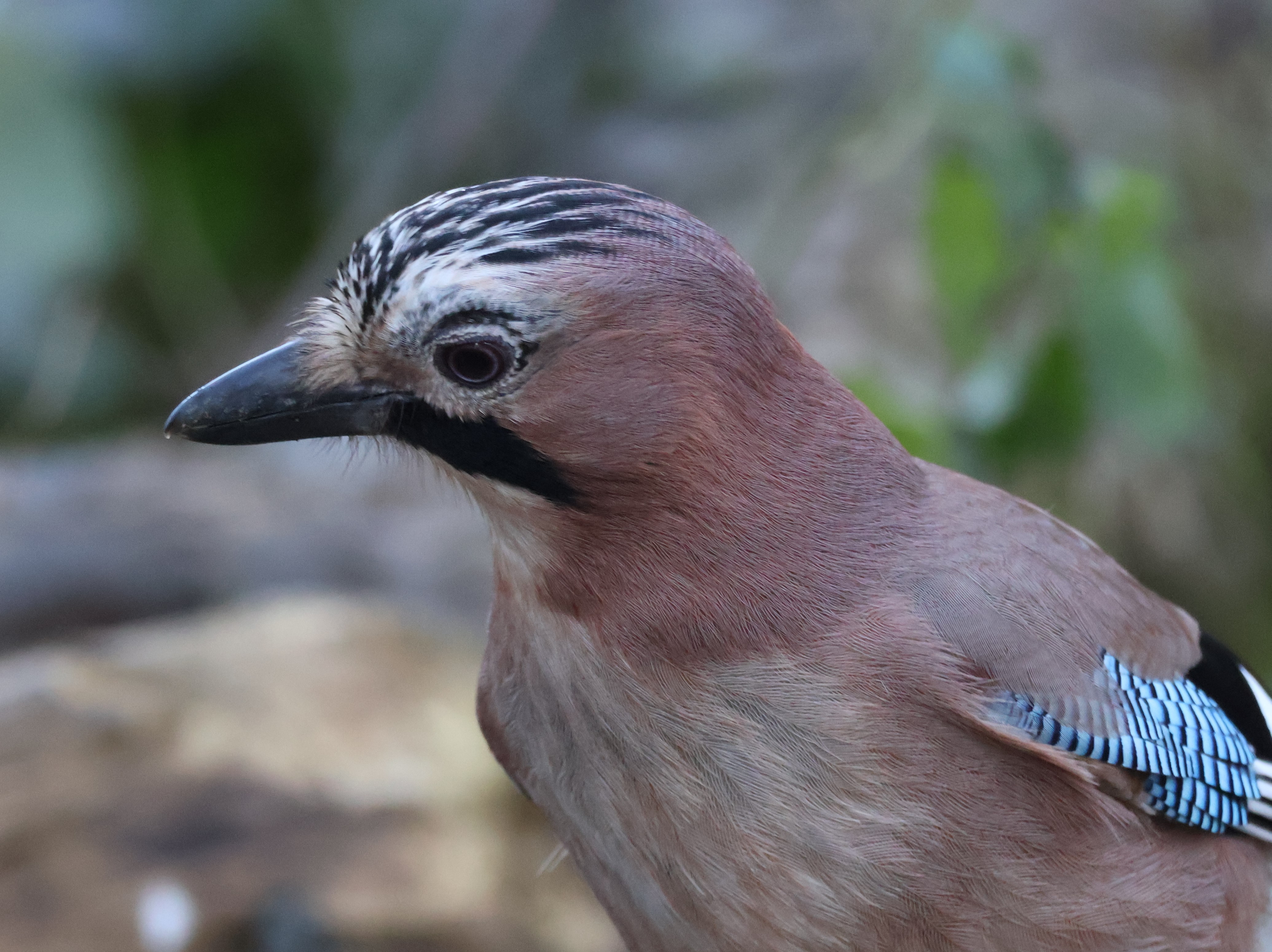
I took the anti-clockwise route, passing the resident  black swan amongst scores of ducks and geese as I did so, then followed the path through the trees, along the roadside and then back into the woodland until I reached a clearing. This is a good spot for watching the woodland bird species, as there are a couple of feeders plus a large log which provides a good photographic point. There were already various small birds around, and I put some peanuts and seeds on the log. They soon attracted a variety of birds - blue tits, great tits, dunnock, robin, magpie, nuthatch and, to my delight, a couple of jays.  I stood close to a tree to try to break up my profile, but was only about ten feet away from the log where the birds were coming in to feed. I have often seen jays in the woodland around the area but never seen them come in close for food before. 

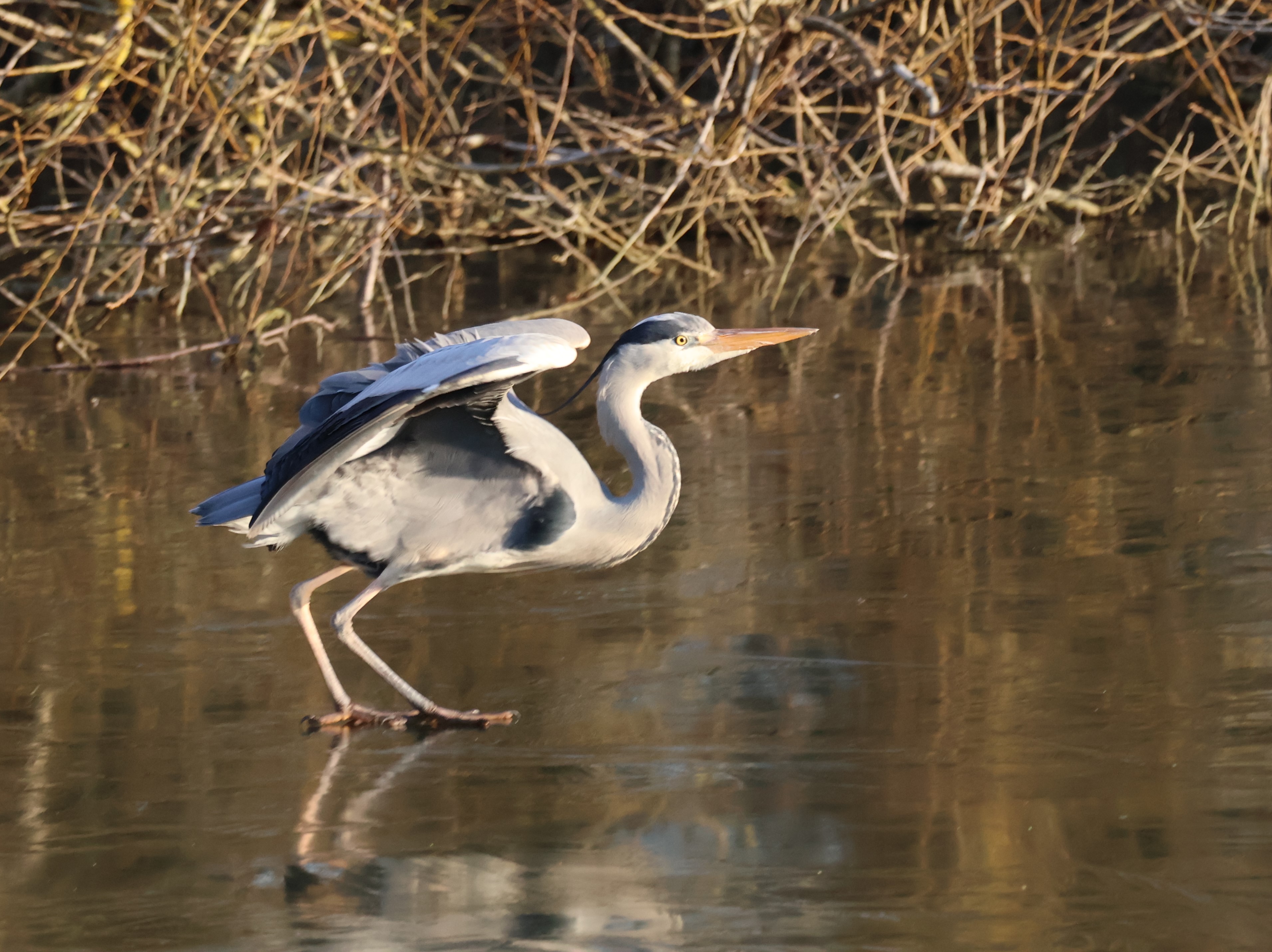
 Continuing along the path, I veered off into the woodland for a short stretch where the path runs parallel to the original one, but is less frequented by walkers and dogs. I re-joined the lake path  and crossed the bridge where I stopped for a while. The lake was frozen in the centre so birds were congregating nearer the edge, including a couple of female goosanders. They came quite close to the edge of the water but then retreated to where the ice started, one of them deciding to rest on the ice . A young heron flew past and landed on the path  further around the lake, whilst on the opposite side I spotted a distant great white egret in the bushes below the heronry. 


Saturday, 13 January 2024

FARMOOR

This morning  I was finally able to get to Farmoor Reservoir where all week there have been reports of a pair of Knot in addition to the Great Northern Diver and Scaup which have been there since the beginning of the month. It was a cold morning, but no frost and the air was still, under a cloudy sky.

I began by making my way across the causeway which separates the two reservoirs, the knot had been reported yesterday on the western bank which is the opposite side from the car park, but I hoped that perhaps they would have relocated on the causeway overnight, which they had. They were quite oblivious of humans as they scurried along in tandem at the waters edge, picking up small insects as they went. It was good to be able to see them at close quarters - last year's sighting was a distant tiny shape which someone pointed out through their telescope!!  I also saw a greater black backed gull perched on one of the buoys further out. 

Continuing my walk, I stopped to speak to someone coming toward me - they pointed out where the Scaup was and mentioned the presence of siskins near the Shrike hide and a common sandpiper on the opposite side of the reservoir. The diver hadn't yet been located.   I found the Scaup just around the corner then continued to walk in the direction of the path which leads to the hide. A small wader flew past me toward the causeway which I soon discovered was the common sandpiper. I stopped for a few photos, quite relieved that it would save me a considerable walk! 

Down at the hide, a pair of mute swans were feeding beneath the alder tree containing feeders. A large flock of finches flew into the top of the tree, a mix of siskins and goldfinches. It was hard to photograph them amongst the leaves, particularly as the light wasn't good either but it was good to see them there. 

Retracing my steps, I took another look at the scaup and the knot which hadn't moved far. As I neared the end of the causeway I became aware of a cormorant flying at speed and then descending into a dive, resurfacing after a few seconds with a huge fish which it proceeded to try and swallow with difficulty. I don't think I've seen a cormorant dive from the air before, rather like  a gannet! 

Other birds of note included some great crested and little grebes, as well as Canada and greylag geese, tufted and mallard ducks. 

Altogether a nice morning's walk, with 6 more sightings for the year. I didn't find the diver, but apparently it was there so hopefully will remain until my next visit. 


knot


 scaup female


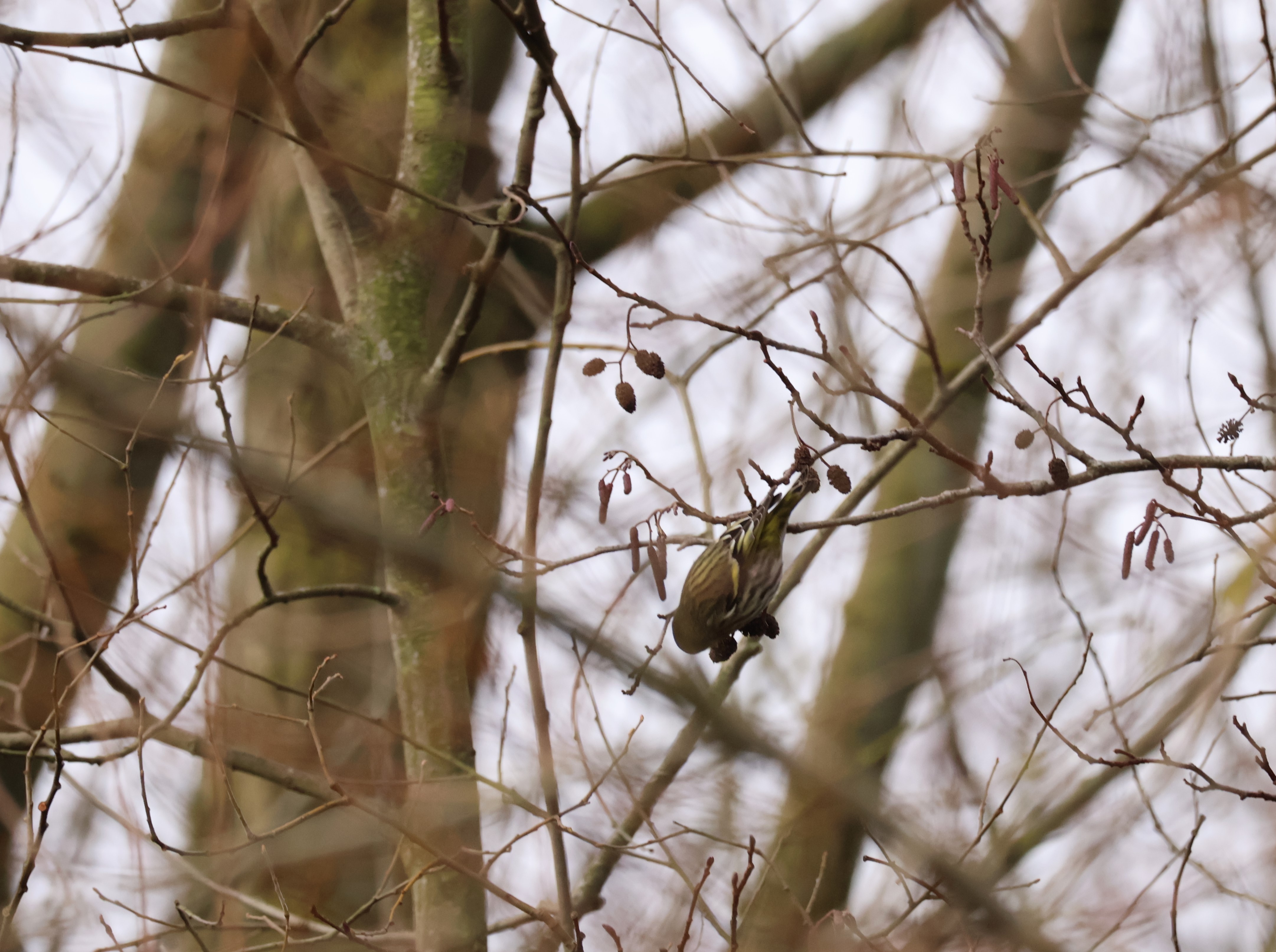
 the best I could get of a siskin!

tufted duck male


 Canada geese

common sandpiper


looking tiny in comparison to the mallards

cormorant eating a fish -it  seemed to be stuck in this position for a while -  I assume it eventually went down!

another cormorant

great crested grebe in winter plumage

greylag goose


Friday, 5 January 2024

LESSER YELLOW LEGS STILL AT FRAMPTON MARSH

 Back in September, I visited the RSPB reserve at Frampton Marsh, with the hope of seeing a wader called a  Lesser Yellowlegs which had just arrived, but sadly missed it. Now over 100 days later, this bird is still at the site, recently showing well in the flooded area adjacent to the visitor car park and even occasionally in the pools in the car park itself. Frampton Marsh is a reserve I have visited during spring and summer, but not winter months so with a few days planned staying with my sister in nearby Cambridgeshire, I expressed a wish to visit,  with a the added attraction of possibly seeing the lesser yellowlegs if still present. 

After a slightly longer journey than expected due to heavy traffic, we arrived at the reserve at around nine thirty. With the car park  quickly filling, we were pleased to find a suitable parking spot before joining the several other visitors scanning the floods with their scopes. We saw good numbers of ducks, lapwings and even a couple of snipe before someone pointed out the lesser yellow legs making its away along the 'shoreline' where a grass ridge met the water not too far from the carpark boundary. It was an elegant bird, its long yellow legs very apparent  as it probed for food and we spent some time watching it as it made its way left to right giving good views to all observers, 

Having ticked it off mentally on our year lists, we went to the visitor centre, and after checking out the lunch menu  with a view to eating in the café later on,  found our way out to the reserve. It was bright sunshine, quite chilly but with little wind and the reedbeds looked golden yellow against the blue sky and water.  We were glad we had worn wellies, as the wardens warned us that some of the paths were partly or totally flooded! 

As we made out way around the hides, we noted the usual  range of duck species on the reserve which included good numbers of wigeon and a few pintail,  although we missed out on the goldeneyes, not realising they were there. Hoping to see some  wintering brent geese, we climbed the steps to the sea wall and started to walk along it  but then noticed a large flock of dark bodied  geese flying in from the Wash which we identified as brent geese. The high tide had obviously caused them to relocate and whilst some settled in a distant field field, others flew overhead and  stopped off on the reserve itself. I would  like to have seen whooper swans but they tend to fly in at dusk and  off at dawn, not remaining on site during the day and we were unable to spot any during our visit. 

Along the perimeter of the reserve,  goldfinches could be seen enjoying the seeds from the sunflower plot and at one time a  large mixed finch flock flew in and perched on a hawthorn bush. We scanned with binoculars and found that the flock  included several bramblings as well as greenfinches, chaffinches and goldfinches. Whilst  we stood watching, a kestrel landed in a nearby tree, giving excellent views as it sat there almost motionless, seemingly unconcerned by the visitors photographing it. 

With time moving on, we then made our way back to the cafe, stopping for a snack lunch before returning home. 


LONG TAILED BLUES AT PORTSDOWN HILL

My best butterfly year is continuing as I added another rare species to my year list today. Long tailed blues are relatively scarce migrants...